Author: Elena Maria Niebuhr | Design Talent & Executive Search Consultant at Konzepthaus
Connect with Elena“If someone is unhappy, it’s usually about money, right?”
When someone leaves, most companies reach for the comfortable explanation: they lost them to a higher salary. It closes the conversation cleanly, but it does not ask anyone to look at what was actually going wrong inside the organisation. And it guarantees that the same thing will happen again.
Psychologist Frederick Herzberg already realised that back in the 60s. He distinguished between factors that prevent dissatisfaction, such as salary and job security, and those that genuinely motivate people, including achievement, responsibility and growth. Meaning: you can pay a Chief Design Officer at the top of the market and they might not leave immediately, but that does not mean they are actually thriving 12-18 months in.
In his Drive Framework (2009), Daniel H. Pink digged even deeper and explored three drivers of intrinsic motivation: Autonomy, Mastery, and Purpose. He argued that, once pay is fair, these are the basic requirements for any work that’s built on creativity, judgement, and vision.
So when a leadership role in Mobility Design considers a move, Pink’s framework is something one should definitely look at closely.
A Creative Director at a major European automotive OEM. The brand is iconic, the role is prestigious, and the package is competitive. From the outside, nothing makes sense about the fact that they are considering a move. But inside, the past three years have been a study in creative erosion.
The EV programme brought engineering-led constraints that compressed the Design language before it reached production clay and every exterior proposal goes through four layers of internal alignment before a decision lands. Technically, this person leads the Design direction. In practice, they have not made a genuinely unconstrained creative decision in two years. Autonomy has not been taken away in any single moment. It has been negotiated away, meeting by meeting, until the person sitting in that chair no longer fully recognises the role they accepted.
Autonomy means having the freedom to make meaningful decisions about your work. In Automotive Design, that means having genuine creative influence while navigating technical, commercial, and regulatory constraints. When those constraints leave little room for independent judgement, frustration builds. And over time, a Design Leader may start looking for an organisation where their voice carries more weight.
A Head of CMF Design at a premium Mobility brand. She is exceptional at her work. Three years in, she is being offered a step up: a broader Design management position, more budget responsibility, a larger team reporting to her. Objectively, it looks like progress. But CMF Design is one of the most tactile, craft-intensive disciplines in the Automotive industry. It is about material weight, surface grain, the precise quality of a finish under different lighting conditions across different markets. A management role takes her further from the craft she loves, not closer.
For a Designer driven by mastery, career progression isn’t necessarily about managing more people or moving up the hierarchy. It’s about getting better at what they do, tackling new challenges, and continuing to develop their expertise.
In disciplines such as CMF or UX, that connection to the work can be central to professional satisfaction. If a promotion means actually designing and making creative decisions are replaced by more administration, it can feel like losing something rather than gaining something. If there is no other way to keep developing their craft, the next career move may be outside the organisation.
A Design Leader joins an emerging Mobility company to define a new Design language and help build something from the ground up. A year later, priorities have shifted. Long-term concept work gives way to near-term production demands, and the original creative ambition quietly disappears. The salary hasn’t changed, and neither has the role. Officially. But the reason for taking it has.
A VP of Design at an emerging EV start-up. He joined when the brief was genuinely rare: a blank canvas, a completely new Design language, the chance to define how a new kind of vehicle would look and feel from day one. The kind of mandate that draws serious senior talent away from established OEMs. Twelve months later, investor priorities shifted and the concept work was quietly deprioritised in favour of near-term production variants. The long-term Design strategy was set aside. He did not leave because a competitor called with a bigger salary, but because the project he had joined no longer existed.
Purpose is the connection between what someone does every day and what they believe that work is meant to achieve. As the Mobility industry transforms, Design organisations are continually reassessing their priorities. That makes it particularly important for companies and Design Leaders to understand whether their ambitions still align. Because when the work no longer connects to what someone came to achieve in the first place, a pay rise is unlikely to restore that connection.
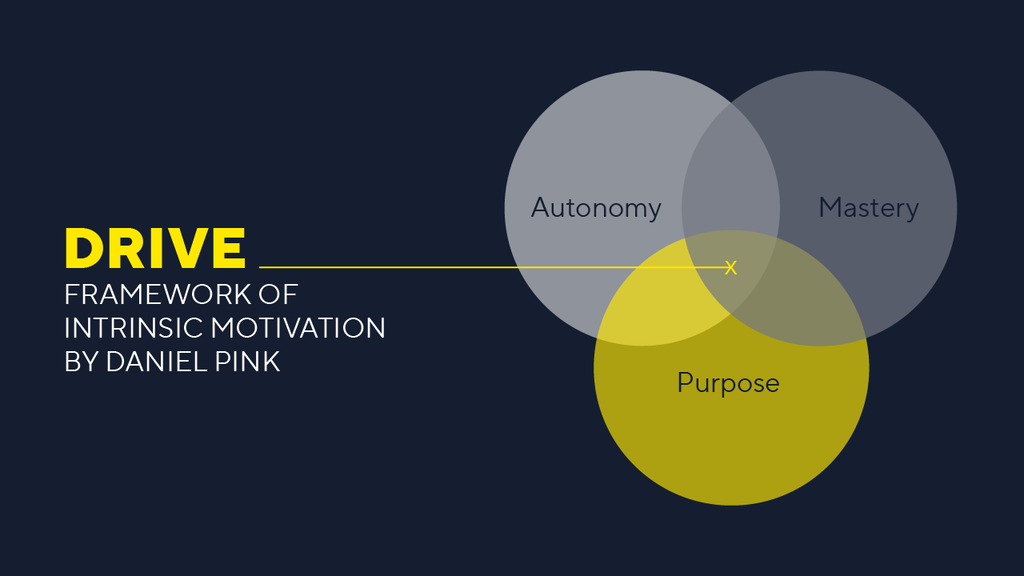
When Autonomy, Mastery or Purpose collapses, no retention package in the world will fix it. Because in most cases, the decision has already been made before the company realised anything is wrong.
The Drive Framework isn’t an abstract concept. Autonomy, Mastery, and Purpose shape how people experience their roles, what they want from their careers, and whether they can imagine a future within an organisation.
For companies looking to hire senior Mobility Design talent, that means looking beyond the job description and salary package. Because a successful placement isn’t simply about filling a position, and more about finding the right person for the organisation, at the right moment, with a clear understanding of what both sides need.
Ask yourself:
The answers need to reflect the reality of the organisation, not just what sounds attractive during an interview.
For Design Leaders considering their next move, the same questions apply in reverse. What matters most to you at this stage of your career? Has that changed over time? And which role can genuinely offer it?
Understanding the motivations behind the Drive Framework, creating the environment where a Design Leader can truly thrive, and finding the person who can thrive within it, is at the heart of Executive Search. Because the difference between the right placement and the wrong one can shape the Design direction of a brand for a decade.
Looking for a new job opportunity or a perfect candidate?
Explore our Talent ServicesSign up to your regular dose of everything Mobility Design:
deep insights, practical tips, and news on upcoming events.