Author: Michiel Cremers | Design Craft Consultant at Konzepthaus
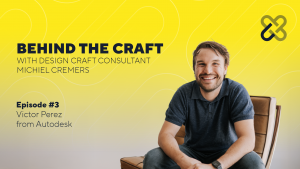
Connect with MichielIn this series, I sit down each month with the people building and shaping the Automotive Design tools designers use on a daily.
How do they think about Design craft, about judgement, and about where Automotive Design is heading? Behind the Craft is where you’ll find out, straight from the source.
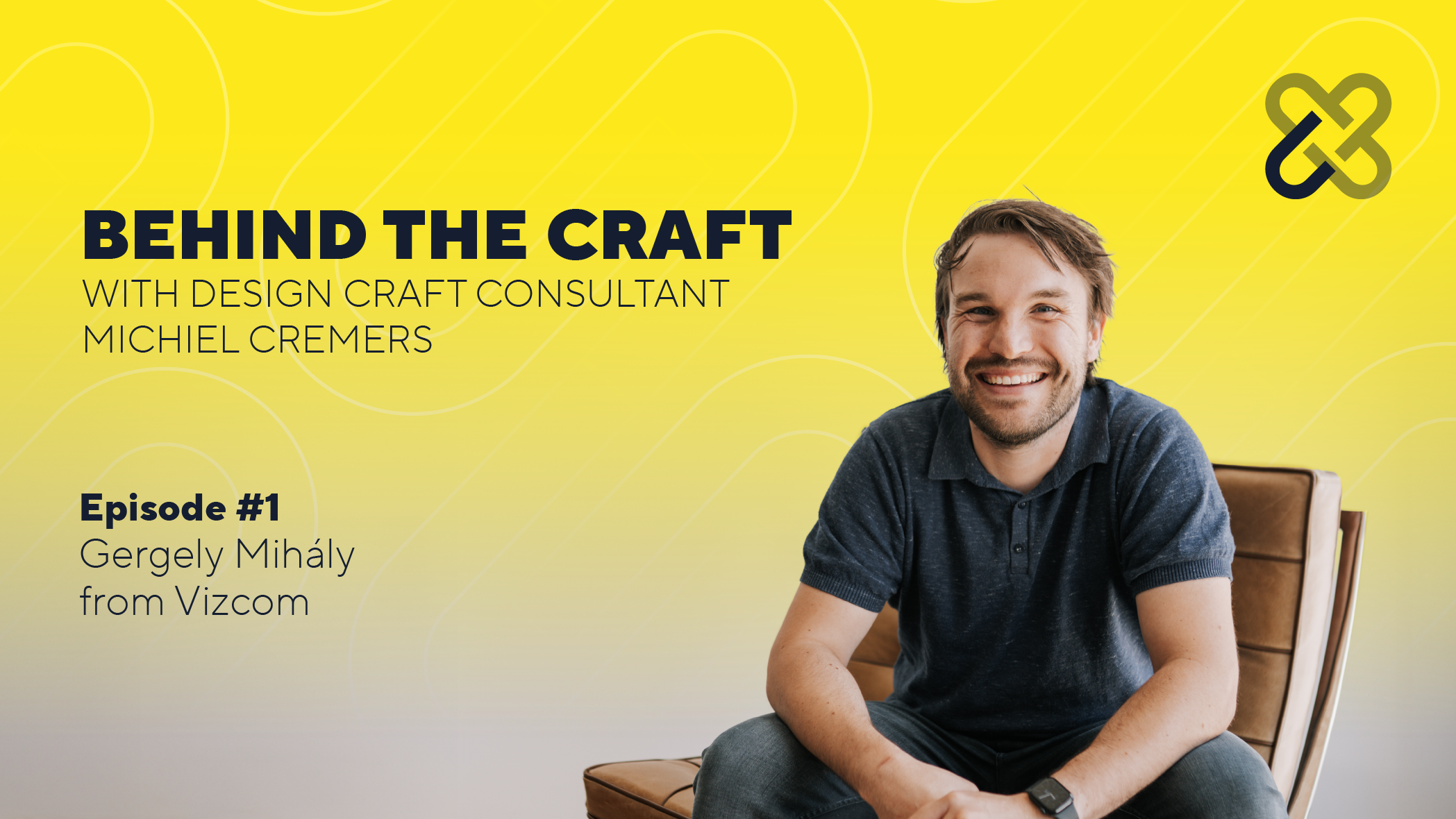
The first guest: Gergely Mihály from Vizcom, who sat down with me to talk about what actually changes in the Design process when visualisation stops being the hard part and what shifts in a designer when the gap between imagination and communication suddenly gets much smaller.
Product Expert Program Lead
Vizcom

Gergely Mihály is an Industrial Designer and Product Expert Program Lead at the forefront of digital Design innovation. At Vizcom, he specialises in advancing Design tooling and empowering teams around the world to integrate cutting-edge technology into their ideation process. His background spans mobility and vehicle design across boutique firms and freelance projects. Working with designers who use AI tools for the very first time, Gergely sees both the excitement and the resistance up close, and knows exactly how to navigate between both emotions.

Vizcom is an AI-powered Design tool built specifically for industrial and product designers – spanning industries from automotive and footwear to apparel, gaming, and architecture. Designers can upload hand sketches or draw directly inside Vizcom, instantly create photorealistic renders and even generate 3D models, all within the same platform. It keeps teams in their natural creative flow while dramatically compressing the path from first idea to final visual.
Let’s dive into the first episode of Behind the Craft!
The biggest misconception is that AI design tools are trying to replace designers.
At Vizcom, we see the opposite happening. The value isn’t in generating finished concepts from a prompt, it’s in helping designers think faster, explore more possibilities, and communicate ideas more effectively. The designer remains the author. The sketch, intent, taste, judgment, and decision-making all come from the human.
A beautiful render isn’t the same thing as a good design. Good design still requires understanding users, constraints, manufacturing realities, business goals, and human needs. AI can accelerate visualisation, but it doesn’t replace Design thinking.
I think we’re entering a world where the render is no longer the signal.
For a long time, the ability to create a beautiful rendering was a differentiator because it required specialised skills, tools, and significant effort. Today, AI is making high-quality visualisation accessible to almost everyone. The barrier to producing compelling imagery is dropping rapidly.
As a result, the value shifts elsewhere, from producing the image to providing the judgment, context, and vision that give the image meaning. What matters now is: Can this idea actually exist? Why does it matter? What problem does it solve? What’s the story behind it?
The future belongs to designers who can connect imagination with execution, to those who are strong storytellers, systems thinkers, and creative directors. As making something look great is becoming easier every day, they’ll need to understand manufacturing, business, culture, user needs, and how ideas move from concept to reality. Knowing what to make, why it matters, and how to bring it into the world, that’s where the craft is headed.
I would love to see more emphasis on decision-making rather than artifact-making.
Many programmes still focus heavily on producing outputs. That’s important, but in practice, designers are increasingly evaluated on their ability to navigate ambiguity, synthesise information, align stakeholders, and make thoughtful tradeoffs.
Students should also be learning how to collaborate with intelligent design tools. AI literacy shouldn’t be treated as a separate technical skill, it should be integrated into the Automotive Design process alongside sketching, research, prototyping, and critique.
Most importantly, education should reinforce that tools change, but Design fundamentals remain remarkably consistent.
I get to witness this almost every day when showing Vizcom to new designers.
There’s a moment that happens over and over again: someone puts in a rough sketch, something they might have spent just a few minutes drawing, and then sees it transformed into a realistic visualisation that genuinely matches the idea they had in their head.
The reaction is often immediate. You hear the “wow,” you see the surprise, and sometimes there’s a brief pause as they realise they’re looking at something that previously would have taken significantly more time and effort to communicate.
What’s special isn’t the rendering itself. It’s the moment of recognition. The designer sees their intent preserved. The gap between imagination and communication suddenly becomes much smaller.
For me, that’s the most rewarding part of the job. No matter how many times I see it, that moment never really gets old. Watching someone realise that they can explore and express their ideas at a completely different speed unlocks a new level of confidence and creativity. That’s when you can almost see their mindset shift from “Can I make this?” to “What else can I create?”
Instead of asking whether AI will replace designers, people should be asking: What kinds of design become possible when visualisation is no longer the bottleneck?
Throughout history, every major creative tool, from CAD to Photoshop to digital prototyping, expanded what designers could explore. AI is another step in that evolution. The opportunity isn’t simply to do today’s work faster, but to rethink how ideas are discovered, developed, communicated, and realised.
The designers who thrive will be the ones who see AI not as an endpoint, but as a new creative medium.
What stuck with me the most: The render is no longer the signal.
It connects to something he wrote about a while back: when anyone can generate 200 sketches, the value is not in producing them, it is in knowing which 2 deserve to go further.
Gergely is pointing at the same shift from a different angle. If a compelling image is becoming accessible to everyone, then the image itself stops being the thing that sets you apart. The differentiator moves somewhere harder to automate: toward judgment, story, and knowing what to make and why it matters.
None of these are necessarily new skills, they have always been at the core of good Automotive Design. However, for a long time, they were partially hidden behind the craft of producing the image. As that craft becomes easier, the thinking underneath it becomes more visible, and a lot more valuable.
Check out the Haus of Learning AI Essentials | Vizcom Workshop!
Explore more of our Learning offersSign up to your regular dose of everything Mobility Design:
deep insights, practical tips, and news on upcoming events.